
- services
- Platform Engineering
Build secure, scalable and reliable platforms
Build, modernise and operate the cloud platforms, infrastructure and engineering foundations that keep your software reliable as usage, complexity and delivery demands grow.

The platform challenge
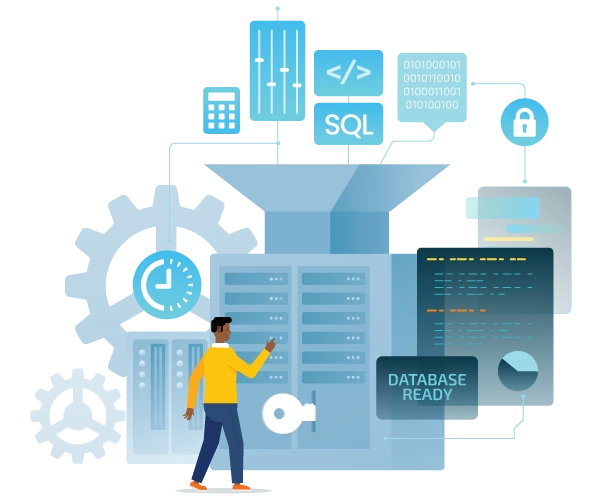
Growth adds complexity. Your platform needs to keep up.
As products grow, infrastructure complexity grows with them. Deployments become harder to manage, failures become more expensive, and engineering teams spend more time keeping systems running instead of improving them.
Unreliable Releases
Manual processes and varied environments contribute to slow and risky deployments.
Scaling Under Pressure
Increased traffic highlights inefficiencies within the infrastructure, database, network, and application design.
Limited Production Visibility
Lack of observability means issues are found by customers before the team is aware.
Operational Complexity
Managing infrastructure, CI/CD pipelines, security, and cloud resources becomes more challenging.
Our engineering approach
Engineering platforms for scale, resilience and reliability.
We combine platform architecture, automation and security engineering to build infrastructure that can support growing workloads while remaining reliable, maintainable and easier to operate.
Platform-First Architecture
Architect for high concurrency, elastic scalability, and resiliency right from the ground up.
Automated DevOps Workflows
Automation of CI/CD, infrastructure management, and operations to make your delivery process more consistent and reliable.
Security-First Engineering
Incorporation of SOC 2 Type II-aligned practices in your cloud platforms and delivery pipelines.
Well-engineered, high-performing platforms that are designed to scale and deliver reliably.
What We're Offering
Platform Engineering Capabilities
We specialize in the complex technical ecosystems that power today's enterprises and high-growth scale-ups.
Platform Architecture
Designing robust application and infrastructure architectures for scale, reliability and maintainability.
Cloud Infrastructure
Design & optimise AWS/Azure cloud environments for performance, availability and operational efficiency.
Infrastructure as Code
Repeatable, version controlled, and easier to manage infrastructure using Terraform/CloudFormation.
CI/CD & Release Engineering
Automated build, test and deployment pipelines that make releases safer and more predictable.
Observability & Monitoring
Metrics, logs, monitoring and alerting for teams to provide visibility into system health and performance
Reliability & Performance Engineering
Availability, resilience, database performance, concurrency and system behavior under load.
Applications & Microservices
Product architecture designed for scale, reliability and maintainability
CI/CD & Release Engineering
Automated build, test and deployment pipelines
Infrastructure as Code
Terraform / CloudFormation-managed, version-controlled infrastructure
Cloud Infrastructure
AWS / Azure environments engineered for performance and availability
Platform engineering vs. DevOps
Beyond pipelines. We engineer the platform behind them.
DevOps and Platform Engineering are related, but they answer different questions - and most teams need both.
Zediant integrates all aspects of platform architecture, cloud, automation, observability, and reliability engineering to provide a base upon which your engineering team can build, and it is more than just a faster pipeline.
Operational efficiency
Reduce operational friction through automation.
Manual processes slow teams down and introduce risk. We automate all the infrastructure, deployment, and monitoring work that would otherwise eat up engineering hours - so your team can focus on the product, not keeping the lights on.
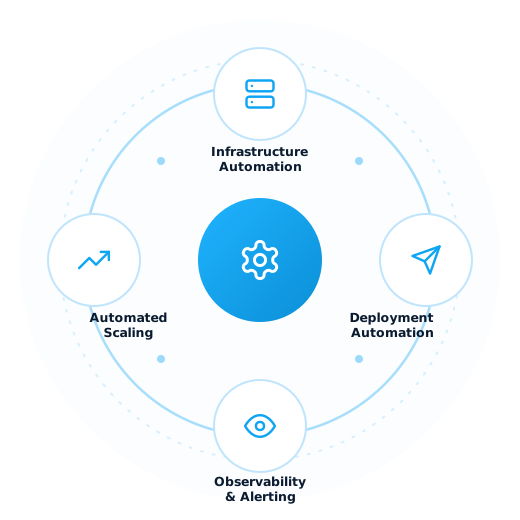
Infrastructure Automation
Standardisation of environment and infrastructure change using code to minimize configuration drift.
Deployment Automation
Minimize manual actions in releasing and making the deployment process consistent and independent from a specific individual.
Observability & Alerting
Provide earlier insight for engineering teams about potential problems regarding the performance and reliability of systems.
Automated Scaling
Adjust the infrastructure capacity to cope with different workloads and traffic pattern dynamically.
Faster, more consistent deployments with fewer manual errors and less operational overhead.
How We Work
From Platform Assessment to Production Reliability
Platform Engineering is not something you just do once, but how your platform scales with your product. Our process takes you from an assessment of your current environment to a platform designed to evolve along with it.
Assess
Architecture, infrastructure and reliability review
Architect
Target architecture and automation strategy
Implement
Platform, CI/CD and observability build-out
Optimise
Performance, reliability and continuous evolution
Assess
First, we gain an understanding of your existing architecture, infrastructure, release process, reliability concerns, and operational constraints so that the recommended approach always considers your systems in their current form.
Architect
Next, we specify the desired target platform architecture, infrastructure patterns, automation approach, and reliability constraints - defining the roadmap for the journey to get there.
Implement
Third, we implement the new platform (including the required infrastructure, CI/CD pipelines and observability), implementing changes incrementally in order to give your team visibility and keep delivery going.
Optimise
We measure behavior of your systems, optimise their performance and reliability, and continuously evolve the platform based on your evolving requirements - in a cycle that leads to the next round of assessment.
There's no endpoint to platform engineering: each new cycle of assessment and optimisation will ensure that your infrastructure remains aligned with the future direction of your product.
What you get
What better platform engineering delivers
Our reliability, scalability, and confidence in our releases comes from our architecture and operations, not a process or tool. The platform engineering practice we follow is intended to deliver:
Reliability
Ensure availability and reduce consequences of infrastructure and application failures.

Scalability
Enable scalability without having to continuously modify the core platform.

Release Assurance
Improve repeatability, visibility, and recoverability at the time of release.
Operational Resilience
Failures should be detected, isolated, and recovered to prevent business impact.
Platform readiness
Is your platform ready to scale?
Whether you are planning for rapid expansion, infrastructure updates, or increased complexities in your operations, we can help pinpoint where your system will need to adapt.
Platform engineering in practice
Engineering platforms built for real-world scale.
From high concurrency systems to multi environment systems, observe the architecture and infrastructure that we have designed to run such stringent production environments.
11Wickets: Cloud Autoscaling & High-Availability Architecture
A high-traffic fantasy sports platform faced severe latency and database bottlenecks during live cricket tournaments. Zediant re-architected their AWS infrastructure with dynamic autoscaling and multi-master MySQL Galera clustering, delivering sub-second response times under peak load while cutting off-peak cloud costs by up to 40%.
Key Results
Services:
Cloud Architecture, Autoscaling Groups, MySQL Galera Clustering, DevOps & Infrastructure as Code

Multi-DMS Middleware Integration for Automotive Dealer Networks
Automotive dealer networks struggled with disconnected, on-premise dealer management systems that delayed inventory, customer, and sales synchronisation. Zediant engineered an asynchronous middleware integration engine using Java Spring and message queues to bridge CDK, ERA, and Pentana systems with cloud platforms.
Key Results
Services:
Middleware Platform Engineering, Asynchronous Message Queuing (JMS/ActiveMQ), Adapter Architecture, REST API Gateway
Security & governance
Security and governance built into the platform
Security is not another process and is not an analysis that happens after the implementation; on the contrary, security turns into a natural part of the development of the platform itself. The Zediant platform adheres to the security standards which are SOC 2 Type II certified for infrastructure, deployment pipeline, and access management.
Secure Infrastructure
Security measures that are built into the infrastructure design and environment from the start, not as an add-on.
Secure Delivery Pipelines
Security measures that are integrated into the delivery process, ensuring any risks are identified prior to the deployment.
Identity & Access
Access control that is applied through proper authentication and authorization measures.
Data Protection
Controls that are implemented to provide protection for sensitive data.