
- About Us
- Engineering Excellence
How we engineer software, from architecture to production
Good software development is not merely about writing code but is about making technical judgments, building in quality through each phase of development and producing systems that grow along with your business needs.
Engineering Principles
Engineering principles that guide every build.
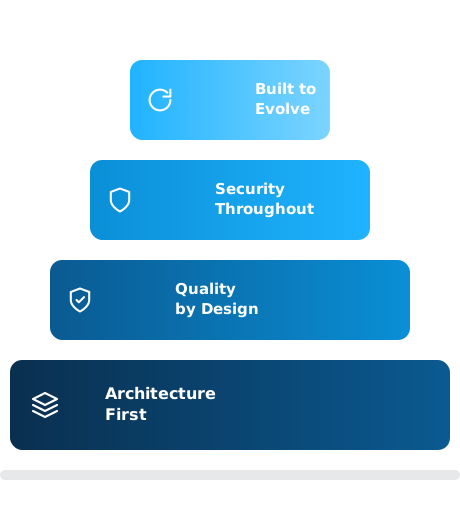
Our engineering approach is based on a handful of principles that apply whether we are building a new product, modernizing an existing system or extending an established engineering organisation.
Architecture First
We establish the right technical foundations before implementation begins - see how we approach architecture decisions below.
Quality by Design
Testing, code quality and maintainability are part of development, not activities left until the end - see how we approach quality engineering below.
Security Throughout
Security considerations are incorporated into every stage of engineering - see how we approach security below.
Built to Evolve
We design software to accommodate changing requirements, new integrations and future product growth.
Engineering Lifecycle
A disciplined engineering lifecycle.
Every engagement follows a structured engineering process designed to reduce technical risk, maintain quality and keep delivery aligned with business priorities.
Discover & Align
Understand business requirements, users, existing systems and technical constraints.
Architect
Define system architecture, technology choices, integration boundaries and scalability considerations.
Build
Develop in iterative cycles with engineering standards, code reviews and continuous integration built into the workflow.
Validate
Test functionality, performance, security and reliability throughout development - see how we approach quality engineering below.
Release
Use automated delivery pipelines and controlled release practices to move changes safely into production.
Improve
Monitor, learn and continuously improve the software based on real-world usage - see how we approach continuous improvement below.
Architecture
Engineering decisions that hold up at scale.
Our architectural decisions will be made based on the product, the business considerations, the technical considerations, and the evolution anticipated.
Architecture & Design
System architecture built for business requirements, scalability, and maintainability.
Technology Decisions
Selection of technologies that is based on product requirements and sustainability.
Integration Architecture
Well-defined borders and interfaces of applications, services, and systems.
Performance & Scalability
Engineering decisions taking into consideration traffic, volume, concurrency, and scalability.
Quality Engineering
Quality is built into the engineering process.
Quality is not the end point. Our design is such that we ensure quality throughout our development cycle to identify problems at an earlier stage.
Code Quality
Code review, engineering practices and code that can be maintained.
Automated Testing
Automated testing that is built into development and deployment processes.
Functional & Integration Testing
Testing for functionality and integration between systems.
Performance & Reliability Testing
Testing based on how users and the system actually use it.
Observability & Monitoring
Monitoring and logging to spot problems before they occur.

Modern engineering, enhanced by automation.
We use automation and AI-enabled development where they improve developer productivity, testing, debugging and documentation. Experienced engineers remain responsible for architecture, technical decisions, code quality and outcomes.
Security by Design
Security is part of how we engineer.
Security considerations are incorporated throughout the software development lifecycle - from architecture and access controls to testing, deployment and ongoing maintenance.
Secure Development
Security practices integrated into development workflows.
Access & Identity
Role-based access and proper controls on systems and data.
Data Protection
Engineering efforts focused on protecting sensitive application and business data.
Secure Delivery
Security measures being addressed during testing, delivery, and operations processes.
Delivery & Operational Discipline
Transparent delivery, without the black box.
Our clients should not need to wait for the release to get an insight of what is going on. Our delivery processes ensure visibility through the project.
Sprint Reviews
Regular demonstrations of progress and completed work.
Technical Documentation
Clear documentation of architecture, decisions and system changes.
Delivery Reporting
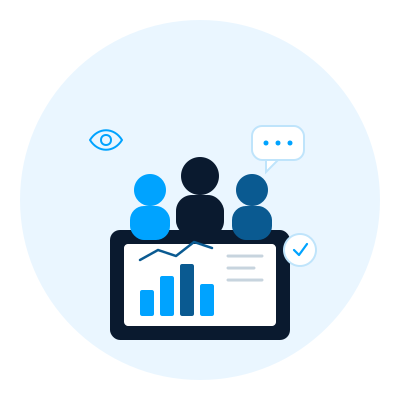
Visibility into progress, quality metrics, risks and upcoming priorities.
Engineering Accountability
Clear ownership, review processes and delivery standards across the engagement.
Continuous Improvement
Software gets better when engineering keeps learning.
The production phase is not where engineering ends. Through feedback, monitoring, and technical reviews, we continuously improve our systems by learning from their delivery.
Monitor application behaviour, performance and delivery signals.
Use production feedback and engineering insights to identify improvements.
Continuously improve architecture, code, processes and product capabilities.

Engineering Outcomes
What this means for your product.
Each principle, process and practice that you see in this page has only one thing in mind - the software that emerges from all of this effort. Now let's find out what that means.
Reliable Software
Systems designed and tested to reliably execute in the production environment.
Maintainable Code
Architecture, documentation, and engineering practices that make future changes simple.
Predictable Delivery
Processes and visibility that increase the reliability of delivery.
Scalable Foundations
Engineering decisions made with future growth and performance requirements in mind.
Engineering in Practice
Application of engineering fundamentals to practical systems.
Our engineering approach is shaped by the complexity of the systems we build - from enterprise applications and integrations to multi-platform products.
11Wickets High-Concurrency Cloud Architecture
Massive, unpredictable traffic surges during live tournament matches causing database query locks, severe latency, and elevated risk of system downtime.
Re-architected AWS infrastructure with dynamic auto-scaling, Elastic Load Balancing, and an active multi-master MySQL Galera cluster with automated read/write splitting.
99.99% uptime during peak matches, sub-second latency, and 30% to 40% cloud cost reduction.
Multi-DMS Middleware Integration Engine
Siloed, legacy on-premise Dealer Management Systems (CDK, ERA, Pentana) with incompatible data formats, causing manual re-entry errors and delayed synchronisation.
Engineered an adapter-based middleware layer using Java Spring Boot, asynchronous message queuing (JMS/ActiveMQ), automated retry policies, and REST API gateways.
60% to 70% cut in manual re-entry, 40% to 50% faster record synchronisation across dealer systems.
Engineering Excellence
Let's discuss the way we would design your product.
Let us know what you are developing or upgrading. We will discuss how we can help you with technical issues, engineering methodology, and delivery methods.