
Automated Crypto Investment & Order-Pooling Platform
Architected a cross-platform mobile application and trade aggregation engine that pools retail recurring investments to cut exchange transaction fees by 35% while enabling accessible $10 micro-investing.
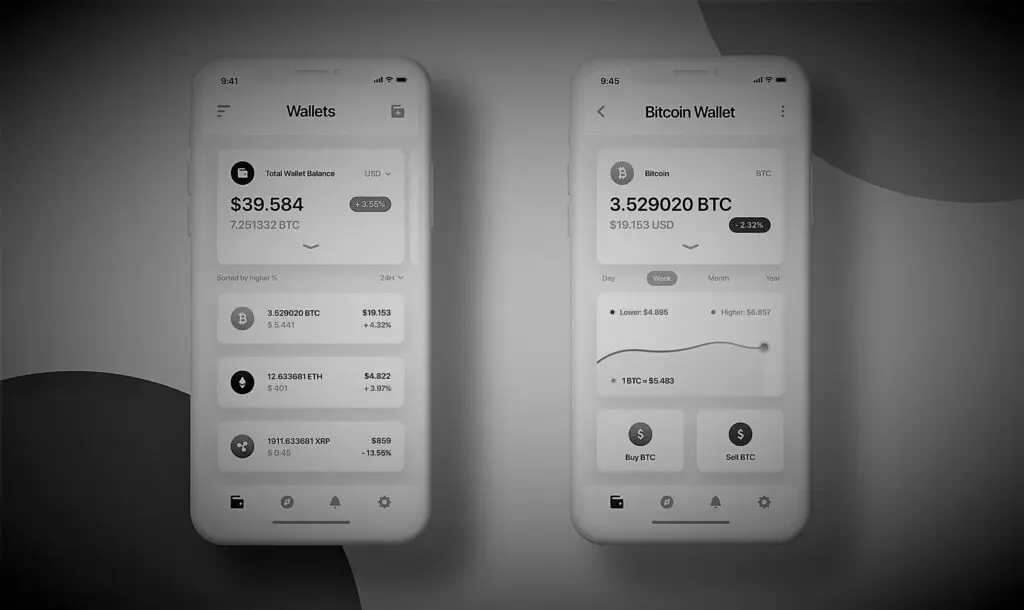
Building a Scalable Recurring Investment Platform for Cryptocurrency
Traditional stock markets have long benefited from dollar-cost averaging and Systematic Investment Plans (SIPs). In the crypto market, retail investors were historically forced to navigate complex trading interfaces and pay punishing transaction fees on small purchases.
Our client, an Australian FinTech startup, set out to simplify digital asset accumulation for everyday retail investors. Their vision was to build an automated micro-investing mobile application where users could set aside small weekly or monthly amounts (starting from just $10) into curated cryptocurrency portfolios without having to watch live price charts or time the market.
To bring this product to market, Zediant was selected to design, architect, and deliver the end-to-end platform. We engineered a cross-platform mobile application using Ionic and Capacitor paired with a scalable NestJS backend that pools hundreds of individual user orders into single exchange transactions, saving users roughly 35% in transaction fees.
Overcoming the Complexity and Cost of Retail Crypto
Creating a retail-friendly financial app in the volatile cryptocurrency market presented four distinct operational hurdles:
High Barriers to Entry
Mainstream exchanges were built for active traders with confusing order books, limit orders, and candlestick charts that overwhelmed non-technical retail users.
Punishing Small-Order Fees
Buying $10 or $25 of Bitcoin on standard exchanges often incurs minimum trade fees that eat up a noticeable percentage of the user's initial deposit.
Lack of Automated Habits
Most platforms required users to manually transfer fiat money, convert it, and place individual buy orders each time, leading to poor user retention.
Strict Compliance Demands
As a financial service, the platform required identity verification (KYC), secure fiat payment integrations, and bank-grade encryption of exchange API keys.
Five Core Engineering Challenges We Solved
Handling automated financial transactions requires zero tolerance for calculation drift or dropped requests:
The Order-Pooling Engine
Instead of executing thousands of tiny orders on Binance, our backend aggregates user buys into scheduled batches. This allows the system to execute one large trade and cut per-user exchange fees by 35%.
Fractional Allocation Logic
Once a pooled order executes, the backend immediately calculates the exact weighted portion of purchased coins down to eight decimal places and distributes them to user balances without rounding discrepancies.
Fault-Tolerant Exchange Connectivity
Exchange APIs can experience intermittent rate limits and maintenance windows. We implemented automated retry mechanisms and circuit breakers around the Binance API to prevent duplicate transactions.
Cross-Platform Performance
Using Ionic, Angular, and Capacitor, we delivered a unified codebase that compiled into native iOS and Android apps with smooth 60fps animations and biometric login.
Automated Recurring Schedulers
We built idempotent scheduling services using AWS serverless workers to manage weekly and monthly recurring deposits, ensuring payments never trigger twice.
The 5-Layer Platform Architecture
We separated user presentation, financial business rules, and third-party exchange communication into clean, decoupled tiers:
Ionic & Capacitor Hybrid Apps (iOS & Android)
Provides a clean interface for automated bank deposits, KYC submission, asset allocation sliders, and portfolio tracking.
Node.js / NestJS Orchestration Layer
Handles JWT authentication, rate limiting, request validation, and real-time portfolio balance aggregation.
SIP Scheduler, Trade Pooling & Allocation Workers
Executes recurring investment jobs, batches buy requests, and maintains ledger consistency across all accounts.
PostgreSQL Database (AWS RDS)
Stores user records, financial ledgers, transactional histories, and audit logs with strict relational integrity.
Binance API, Payment Gateways & KYC Verification
Secure outbound connections for automated identity checking, fiat banking rails, and real-time cryptocurrency trade execution.
The Four Phases of Delivery
Our cross-functional team included a Product Manager, two Mobile Engineers, a Backend FinTech Developer, and a QA Automation Engineer:
Discovery and Financial Modeling
We mapped out the recurring investment logic, defined the database ledger schema, and finalized API contracts with third-party KYC and exchange partners.
Core Backend and Mobile Development
We built the NestJS microservices, developed the transaction pooling algorithm, and engineered the Ionic mobile app interface with biometric authentication.
Exchange Integration and Security Audits
We integrated the Binance API with automated circuit breakers, conducted thorough pen-testing, and verified that mathematical allocations balanced to the exact satoshi.
App Store Deployment and Observability
We managed the approval and publishing processes for both the Apple App Store and Google Play Store, setting up automated error tracking and cloud monitoring on AWS.
What the Platform Achieved
The platform successfully lowered the barrier to entry for everyday investors while keeping operations automated and cost-efficient:
- 35% Lower Transaction Fees: Order pooling substantially reduced the exchange fees incurred by retail users compared to placing direct single trades.
- Accessible $10 Micro-Investing: Everyday users could set up small automated recurring investments without worrying about high minimum deposits.
- Strong Consumer Adoption: The applications launched to enthusiastic user reviews, earning ratings of 4.9 on Google Play and 4.4 on the App Store.
- Zero-Touch Daily Execution: The automated recurring engine handles deposits, batch trades, and portfolio balancing without requiring manual staff intervention.
Why Pooled Architecture Won the Market
Most crypto applications fail with retail audiences because they force users to behave like day traders. By treating cryptocurrency like a structured long-term asset through dollar-cost averaging, our client provided a disciplined savings tool rather than a speculative gambling interface. The technical decision to pool orders was key to making the business model viable; without it, small recurring trades would have been completely eaten alive by exchange fee minimums.
Ready for Next-Stage Growth
The decoupled architecture allows the startup to roll out new financial products without re-engineering the core stack:
Multi-Exchange Routing
Expanding trade routing beyond Binance to multiple international liquidity providers to secure the best available market spread.
Thematic Index Portfolios
Allowing users to invest in automated bundles such as top layer-1 blockchains, decentralized finance (DeFi), or green energy protocols.
Automated Rebalancing
Smart portfolio algorithms that automatically reallocate gains into defensive assets when a single coin exceeds target portfolio allocations.
Have a Similar Challenge?
Whether it's real-time reporting, complex integrations, or a platform your team relies on daily - let's talk about what you're building.
Talk to Our Engineering Team