Every engineering leader knows the scenario. Product roadmaps keep expanding, sprint planning brings in critical new deliverables, and your current team is already operating at capacity.
The conventional answer sounds simple: open requisitions and hire more developers. In practice, the reality is painful. Recruiting takes three to six months, technical interviews pull senior engineers away from shipping code, and new hires still need months to understand your codebase before they become productive. Meanwhile, delivery deadlines remain fixed.
The real cost of traditional hiring lag
When delivery pressure mounts, engineering leaders often face two difficult choices: push back the product roadmap and lose market momentum, or overload their core developers until burnout and turnover set in.
Even when budgets are approved, adding permanent headcount creates long-term fixed overhead for needs that are often milestone-driven. Once a major platform launch or modernisation initiative wraps up, your capacity needs might look very different.
What Engineering as a Service actually looks like
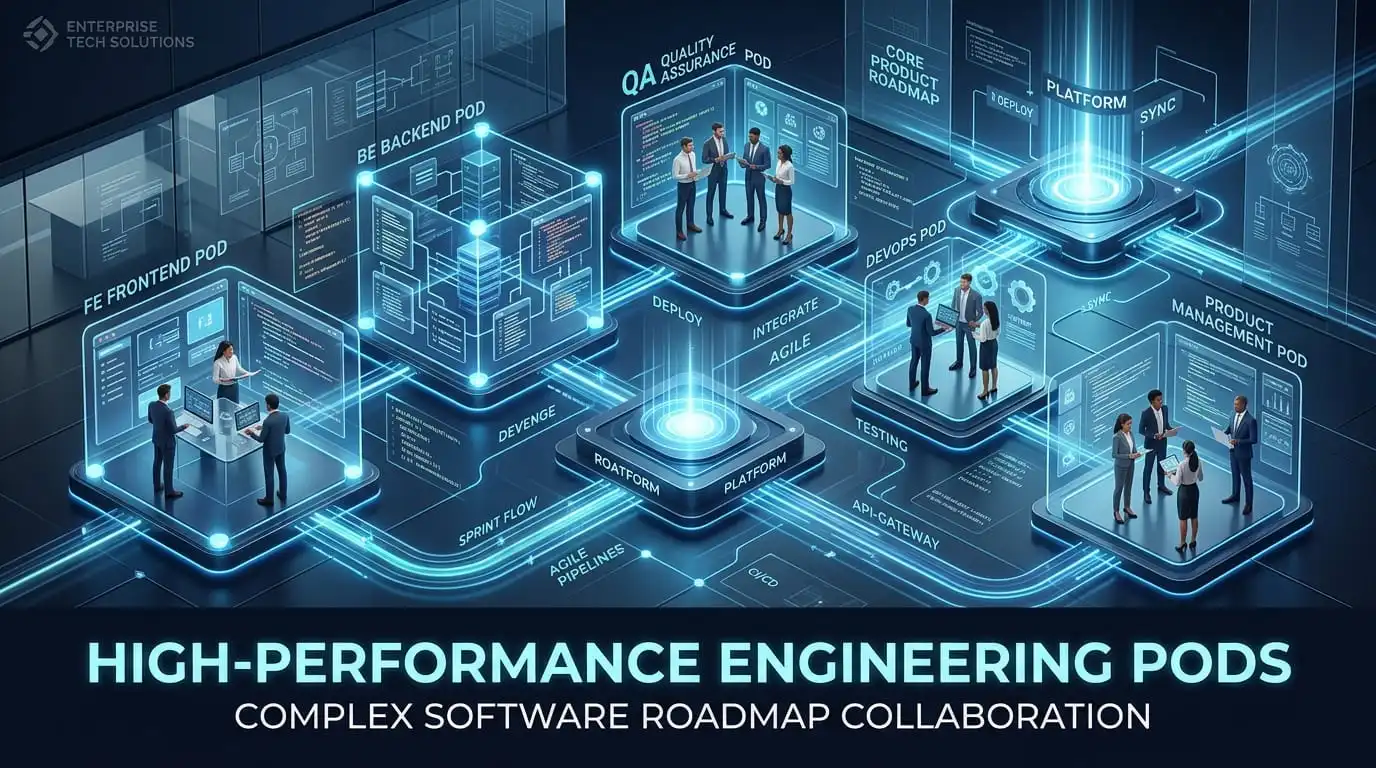
Engineering as a Service (EaaS) is designed to solve this bottleneck. Instead of going through lengthy recruiting cycles or dealing with disconnected outsourcing vendors, you bring in an experienced engineering team that integrates directly into your existing workflows.
This is not about handing tickets off to a third party and hoping for the best. An effective EaaS team operates as a direct extension of your in-house team. They write code in your repositories, follow your architectural guidelines, join your daily standups, and deploy through your CI/CD pipelines from week one.
Key operational advantages of the model:
- Direct alignment with your standards: Engineers adapt to your tech stack, coding standards, and pull request workflows without introducing proprietary dependencies.
- Zero hiring and onboarding friction: Pre-vetted senior specialists hit the ground running with production-ready experience, eliminating months of recruiting lead time.
- Elastic capacity tied to release milestones: Scale engineering bandwidth up to hit critical launch targets, and scale down smoothly once systems stabilize.
- Protects core team focus: Frees your lead architects and product managers from day-to-day firefighting so they can concentrate on high-value product strategy.
- Complete visibility and ownership: Full transparency across your tools like Jira, GitHub, and Slack, with 100 percent of the intellectual property belonging to you.
When does this approach make the most sense?
This delivery model is especially effective when an organisation needs to move fast without adding permanent operational weight. Common scenarios include:
- Accelerating a major product launch or platform rewrite where missing deadlines carries substantial business risk.
- Modernizing legacy subsystems or APIs without pausing ongoing feature releases.
- Expanding into adjacent technologies where your internal team lacks dedicated specialist experience.
- Building out critical roadmap items while keeping permanent headcount lean and manageable.
How we approach engineering delivery at Zediant
At Zediant, we structure our engineering engagements around your actual roadmap rather than generic body-shopping. We embed seasoned developers and architects who work directly alongside your people, adopt your culture, and ship clean, maintainable code at your pace.
You keep complete control of the architecture, product direction, and codebase. We supply the execution capacity to get you across the finish line on schedule.
If your roadmap is growing faster than your current team can comfortably handle, reach out to explore how we can support your upcoming sprint cycles.